AI agents are no longer just summarizing documents or writing draft emails. They are beginning to buy things. They book flights, provision cloud servers, and pay for API access. But giving an LLM-driven loop access to a credit card or a corporate bank account is terrifying. If the model loops out, hits an unhandled exception, or falls victim to a prompt injection attack, it can drain a balance in minutes.
Cloudflare wants to solve this problem at the network level. They recently announced a new set of wallet primitives built directly into their Workers serverless platform, following their introduction of temporary Cloudflare accounts for AI agents. The goal is to give AI agents their own cryptographic wallets while wrapping them in strict, runtime-enforced spending caps that the agent cannot override.
The Security Threat Model of AI Spending
Traditional payment systems assume a human is in the loop. They rely on a person looking at a screen, verifying a price, clicking a button, and passing a multi-factor authentication check. When you automate this, you usually end up with unsafe workarounds. Developers either hardcode API keys with full billing privileges or pre-fund virtual cards with high limits.
Neither approach works well for autonomous software. If an agent runs on a loop and encounters an unexpected error, it might call an external API millions of times. If a malicious actor manipulates the agent's input, they can redirect those calls to their own endpoints, effectively stealing compute resources.
We can group the financial risks of autonomous agents into three main categories:
- The Infinite Loop: The agent gets stuck trying to solve a difficult task. It calls an external paid service, receives an unexpected response, and retries indefinitely. Without limits, this can rack up thousands of dollars in API fees in hours.
- Prompt Injection: An attacker inputs malicious text into a user-facing prompt. This vector was demonstrated in the first autonomous AI agent cyberattack. The text overrides the agent's system instructions, telling it to transfer funds or purchase premium services for the attacker.
- Dependency Hijacking: The agent calls a third-party tool or plugin that has been compromised. The tool requests a payment, and the agent signs it without realizing the destination has changed.
To mitigate these risks, spending limits must exist outside the agent's execution environment. If the code running the LLM can modify its own budget, a compromised agent will simply lift the restriction. The limit must be enforced by the platform hosting the compute.
How Edge-Enforced Wallets Work
Cloudflare is putting the wallet inside the compute runtime. By embedding cryptographic keys directly within Cloudflare Workers, the agent can sign transactions without the developer exposing raw private keys in environment variables.
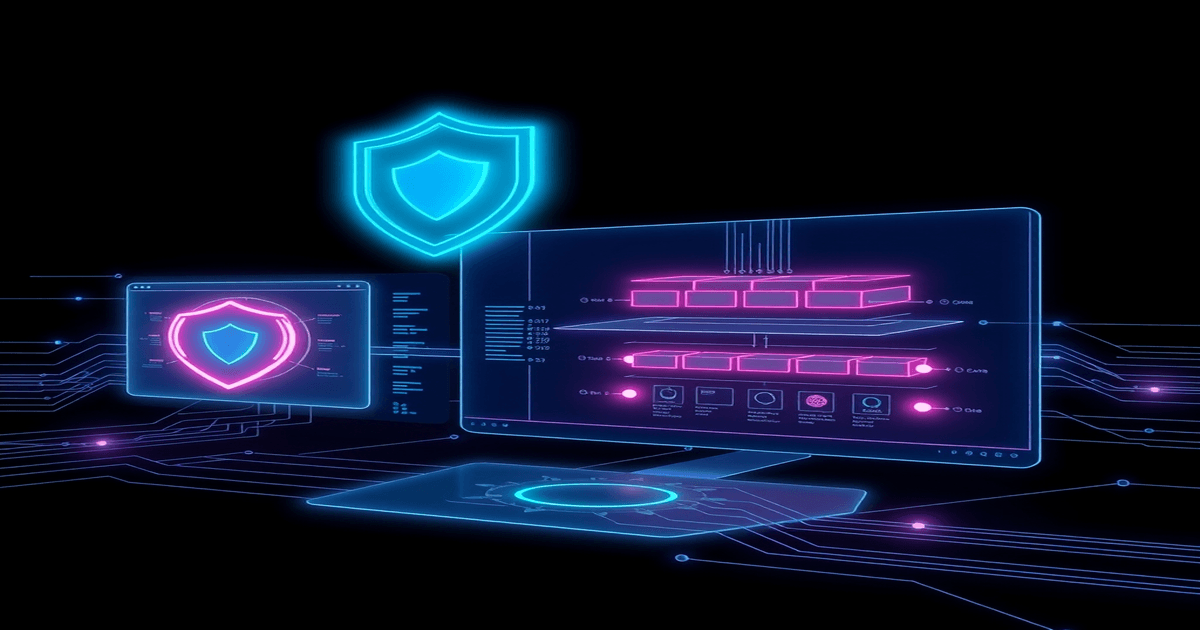
The system relies on three parts: the runtime environment, an isolated key store, and a policy engine.
When an agent needs to pay for a resource, it requests a signature from the local wallet interface. The runtime checks the policy engine before signing. If the transaction exceeds the set threshold, the runtime blocks the signature. The transaction never leaves the edge node.
This separation of concerns is the core security feature. The policy configuration is immutable during the execution run. You cannot change the spending cap from within the worker execution itself. The configuration is set at deployment time. If an attacker tells the agent to ignore its budget, the agent might try to comply, but the underlying runtime will reject the signature request.
State Synchronization at the Edge
Enforcing a daily budget across a globally distributed network is a difficult engineering challenge. Cloudflare Workers run in datacenters close to the user. If an agent is handling requests in Tokyo, London, and New York simultaneously, how does the system track the total spent today?
If the runtime queries a central database for every transaction, you lose the speed benefits of edge computing. The latency penalty would make the agent slow and unresponsive.
To solve this, the platform uses a budget leasing system coordinated by Durable Objects. Durable Objects run in a single location but can be accessed globally with strong consistency.
Instead of checking the central coordinator for every micro-payment, each edge region leases a small portion of the total budget. For example, if the daily limit is $10, the Tokyo node might lease $2, London $2, and New York $2. The local node can approve transactions instantly up to its leased amount.
Once a node exhausts its lease, it requests another allocation from the coordinator. If the global budget is near its limit, the coordinator denies the lease, and the edge node blocks further transactions. This keeps latency low for most requests while preventing the agent from exceeding the global cap.
Developer Integration and Workflow
Setting up an AI wallet requires configuring the boundaries in the project configuration file rather than writing complex validation logic in the application code.
Here is an example of how a developer configures the wallet binding in a wrangler.toml file:
[[ai_wallets]]
binding = "AI_WALLET"
id = "wallet_prod_90812"
limits = { daily_usd_cap = 5.00, max_per_transaction = 1.00 }
allowed_domains = ["api.openai.com", "api.stripe.com", "api.anthropic.com"]
This configuration restricts the wallet to a daily limit of five dollars, a maximum of one dollar per transaction, and limits outgoing payments to verified domains.
Inside the Worker code, the developer interacts with the wallet binding using a simple API:
export default {
  async fetch(request, env) {
    const agentWallet = env.AI_WALLET;

    const paymentDetails = {
      to: "0x71C...3a9",
      amount: "0.25",
      currency: "USD"
    };

    try {
      // The runtime checks the policy here before signing
      const signature = await agentWallet.signTransaction(paymentDetails);

      const response = await fetch("https://api.stripe.com/v3/agent-payments", {
        method: "POST",
        headers: {
          "Content-Type": "application/json",
          "X-Agent-Signature": signature
        },
        body: JSON.stringify(paymentDetails)
      });

      return new Response("Payment processed successfully");
    } catch (error) {
      // If the limit is exceeded, the signTransaction call throws an error
      return new Response("Payment blocked: limit exceeded", { status: 403 });
    }
  }
}
If the agent attempts to call signTransaction when the daily limit has been reached, the runtime throws an exception before generating the signature. The application can catch this error and degrade gracefully, perhaps by sending a notification to a human administrator to request a manual budget increase.
Traditional API Keys vs. Cryptographic Wallets
Most developers currently secure machine-to-machine integrations using static API keys. When you sign up for an LLM provider, you get a key that you paste into your environment variables.
This model has several flaws:
- Static Secrets: If an attacker gains access to your server's memory or environment, they steal the key. They can use it from any machine, anywhere in the world, until you revoke it.
- All-or-Nothing Access: An API key usually grants full access to the account. You cannot easily restrict a key to only spend fifty cents per day or only access specific models.
- No Verification of Intent: The API provider cannot verify if a request was generated by your legitimate agent or by an attacker who stole the key.
Cryptographic wallets change this dynamic by using asymmetric key pairs. The private key remains inside Cloudflare's secure hardware modules. The agent never sees the private key; it only receives the signed output.
The recipient of the transaction verifies the signature using the agent's public key. Because the signature includes details like the timestamp, the recipient address, and the specific transaction amount, it cannot be reused. If an attacker intercepts the signature, they cannot use it to authorize a different transaction.
The Rise of Machine-to-Machine Microtransactions
Securing transactions at the edge opens the door to a broader machine-to-machine economy.
Today, if you want to build an application that uses multiple services-like an LLM for text, a vector database for search, and an image generator for visuals-you have to sign up for three different platforms. You enter your credit card on each site, agree to monthly subscriptions, and manage separate billing cycles.
With autonomous wallets, agents can pay each other directly for individual tasks. An agent writing an article could pay a fraction of a cent to an image generator, another fraction of a cent to a translation tool, and a tiny fee to a fact-checker.
Traditional credit card networks cannot support this because their transaction fees are too high. A payment of one-tenth of a cent is impossible when the processor charges thirty cents per transaction.
Cloudflare's wallets are designed to support digital currencies, stablecoins, and layer-2 payment protocols. These networks allow for micro-payments with negligible transaction fees, making sub-cent transactions viable for real-time API calls.
Legal and Compliance Hurdles
While the technology is ready, the legal framework is not. Giving financial agency to software raises difficult regulatory questions.
Financial institutions must follow Know Your Customer (KYC) and Anti-Money Laundering (AML) regulations. These laws require banks to verify the identity of the person opening an account. But how do you verify the identity of an AI agent?
If an agent commits financial fraud or purchases illegal services, who is responsible? The developer who wrote the code, the user who prompted the agent, the platform hosting the compute, or the creator of the LLM?
Initially, developers will likely link these wallets to a corporate account or a custodian service that holds the actual funds. The custodian acts as the legal buffer, verifying the developer's identity while issuing virtual sub-wallets to the agents.
The Next Phase of the Web
The internet is transitioning from a network of documents read by humans to a network of APIs called by autonomous agents. As these agents take on more complex tasks, they need the ability to allocate resources and pay for services independently.
By moving wallet security to the infrastructure layer, developers can build autonomous applications without the fear of runaway API bills or compromised accounts. Enforcing spending limits at the network edge ensures that even when AI models fail, the financial damage is contained.
Links inserted. Context matched. Navigation improved. Done.