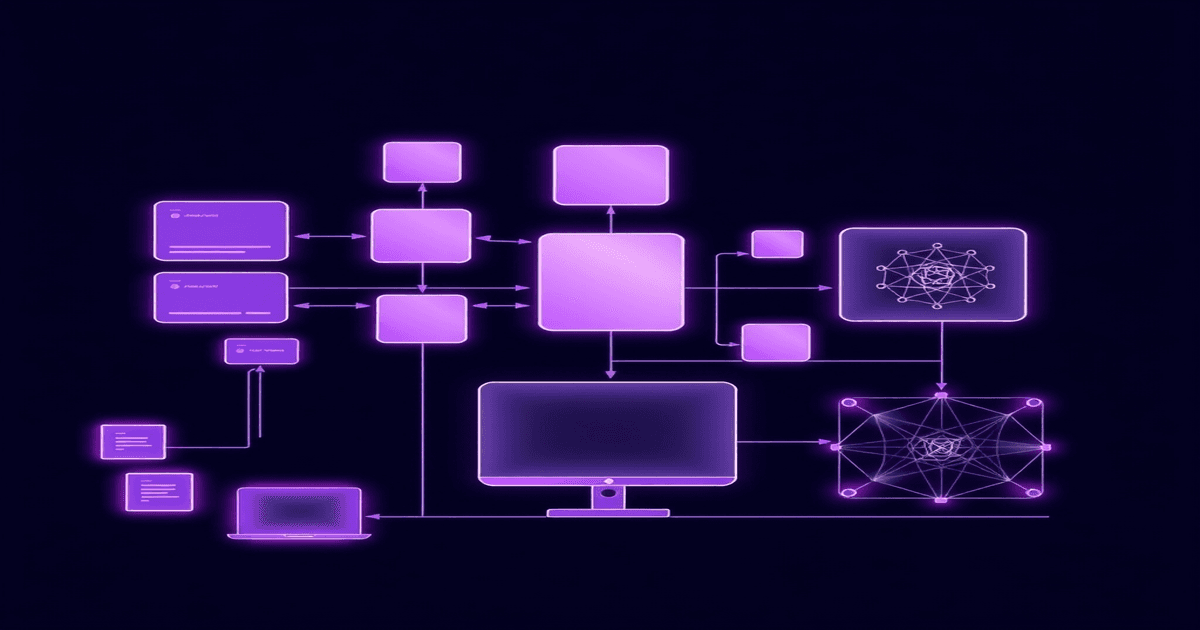
Software engineering practices are undergoing a structural transition. The initial wave of AI integration focused on inline code completion, basic pull request summarization, and chat-based generation. In 2026, the primary engineering challenge has moved downstream: operating autonomous AI agents that interact directly with cloud infrastructure, staging environments, production databases, and customer-facing APIs.
Building platforms that run or delegate work to autonomous agents requires rethinking fundamental assumptions regarding identity management, security scopes, and operational telemetry.
The Boundary Shift: From Prompting to Permission Scopes
When human engineers perform tasks, access control models depend on authenticated web sessions, hardware multi-factor tokens, and persistent role permissions. Autonomous agents, however, run asynchronously across iterative loops—making decisions and triggering system calls without human intervention per execution step.
Assigning persistent administrative credentials or broad service account tokens to agentic workers introduces severe security risks. Production architectures for agent workloads require strict boundary controls:
- Short-Lived Ephemeral Credentials: Token minting services issue temporary permissions valid only for the lifespan of a single tool call or specific task execution sub-step.
- Granular Tool Schemas: Rather than granting raw shell or database access, agents interact via restricted JSON-RPC schemas with explicit payload validation.
- Out-of-Band Human Approval Gates: Destructive or high-impact actions—such as dropping production tables, modifying payment webhooks, or updating core DNS records—require explicit out-of-band human confirmation before broadcast.
[Agent Execution Loop] ---> (Request Ephemeral Token) ---> [Identity Minting Service]
                                                                     |
[Executed System Action] <--- (Scoped Token + Validated Payload) <---+
Security Perimeter Design for Tool Execution
Allowing an autonomous process to execute terminal commands or issue HTTP calls introduces vector risks related to prompt injection and uncontrolled tool chaining. When an agent processes untrusted inputs—such as user webhooks, external issue reports, or scraping targets—malicious payloads can attempt to hijack execution logic.
To mitigate execution risk, modern agent infrastructure decouples the reasoning engine from the execution runtime:
- Isolated Sandbox Workspaces: Agent processes run inside short-lived micro-VMs or ephemeral containers configured with read-only root filesystems and restricted storage mounts.
- Egress Network Filtering: Network interfaces allow connection only to whitelisted domain endpoints required for the assigned task, preventing data exfiltration or unauthorized API calls.
- Deterministic Tool Validation: Inputs passed to system calls undergo strict schema parsing before execution, ensuring parameters match expected data types and formatting limits.
Infrastructure Blueprint for Production Agent Workflows
Designing infrastructure capable of handling hundreds of concurrent autonomous workers requires a multi-layered runtime platform. The diagram below illustrates how modern engineering teams structure the interaction loop between reasoning models and production resources:
+-------------------------------------------------------------------+
|                        Agent Control Plane                        |
|   +-------------------+   +------------------+   +------------+   |
|   | LLM Orchestrator  | <-> | Context Manager  | <-> | Memory DB  |   |
|   +-------------------+   +------------------+   +------------+   |
+-------------------------------------------------------------------+
                                  |
                      (Tool Call Schema Invocation)
                                  v
+-------------------------------------------------------------------+
|                      Execution Proxy & Gateway                    |
|   +-------------------+   +------------------+   +------------+   |
|   | Ephemeral Auth    | <-> | Policy Enforcer  | <-> | Rate Limiter|  |
|   +-------------------+   +------------------+   +------------+   |
+-------------------------------------------------------------------+
                                  |
                    (Filtered Ephemeral Transport)
                                  v
+-------------------------------------------------------------------+
|                    Isolated Sandbox Container                     |
|  [ Micro-VM Workspace ] -> [ App API / Shell / DB Access Pool ]   |
+-------------------------------------------------------------------+
Security Verification and Prompt Injection Resilience
A major structural vulnerability in agentic deployments is indirect prompt injection. When an agent reads an external source—such as a git issue comment, an untrusted web page, or an incoming support ticket—a hidden adversarial prompt can attempt to hijack system instructions.
To prevent indirect prompt injection from leaking data or compromising systems, infrastructure architects employ defense-in-depth isolation techniques:
- Dual-LLM Security Verification: Primary agent tool outputs are evaluated by a lightweight, isolated security judge model before tool execution parameters are passed down to execution proxies.
- Data-Control Plane Separation: Raw data retrieved from external sources is tagged as untrusted context and stripped of functional control tokens before injection into reasoning context buffers.
- State Immutable Rollbacks: Micro-VM workspaces take lightweight snapshots before executing complex multi-step scripts. If security validation fails mid-execution, the environment instantly reverts to its clean initial state.
Observability Beyond Standard APM Metrics
Traditional Application Performance Monitoring (APM) tools measure request throughput, end-to-end HTTP latency, and database query error rates. Autonomous agent workloads introduce non-deterministic execution paths, rendering traditional metrics insufficient on their own.
Monitoring agentic systems requires tracking three distinct operational signals:
- Tool Execution Dependency Graphs: Tracing the sequential chain of tool invocations, shell commands, and API requests triggered during task resolution.
- Context Window Drift & Token Pacing: Tracking token consumption patterns to prevent context window degradation and detect looping behaviors early.
- Falsification & Verification Logs: Recording the specific automated tests and assertion checks an agent executes before declaring a task finished.
Operating Cost Management and Rate Limits
A critical responsibility of systems engineers in the agentic era is managing compute budget consumption. Unlike traditional microservices where resource consumption scales linearly with incoming user traffic, an autonomous agent caught in an ambiguous task logic loop can execute hundreds of LLM calls and tool actions in minutes.
Production control systems enforce multi-tier rate limiting:
- Step Cap Thresholds: Restricting the maximum number of tool execution turns allowed per discrete user goal.
- Budget Allocators: Setting strict financial caps per task invocation, cutting execution context cleanly if token budgets exceed safe parameters.
- Loop Detection Watchdogs: Monitoring duplicate tool call signatures to detect circular execution traps before token budgets spill over.
Managing Failure Isolation and System Recovery
The foundational principle of modern software engineering remains blast radius isolation. When an agent generates an invalid configuration or misinterprets an API schema, architectural safeguards must prevent single-point execution failures from cascading into application outages.
By combining ephemeral environments, strict identity boundaries, and dedicated execution telemetry, engineering teams can harness autonomous workflows while keeping infrastructure predictable, secure, and resilient under production demands.