Freelance platforms are built on speed. The developer who responds first to a job post with a working prototype or a highly targeted proposal almost always wins the contract. If you build an autonomous agent system that scans these platforms, builds the required deliverables in a sandbox, and drafts the submission, you change the economics of digital work.
But building a system like this is not as simple as wrapping an LLM API in a loop. Real platforms deploy aggressive bot protection. Job descriptions are vague, filled with typos, and lack clear requirements. Most importantly, running untrusted code generated by an AI on your local machine is a massive security risk. Attackers can exploit this, showing how easily a malicious repo can hijack Claude Code. If the agent makes a mistake, it can delete files or expose credentials. If it submits broken work, your platform account gets banned.
To build a system that actually works without getting you banned or compromised, you need a decoupled, event-driven architecture. Let's break down how to design and build this system.
The System Architecture: The Three Loops
A single, monolithic script will fail. If your scraper gets blocked by Cloudflare, your code execution engine shouldn't crash. If your LLM provider hits a rate limit, you shouldn't lose track of the jobs you already scraped.
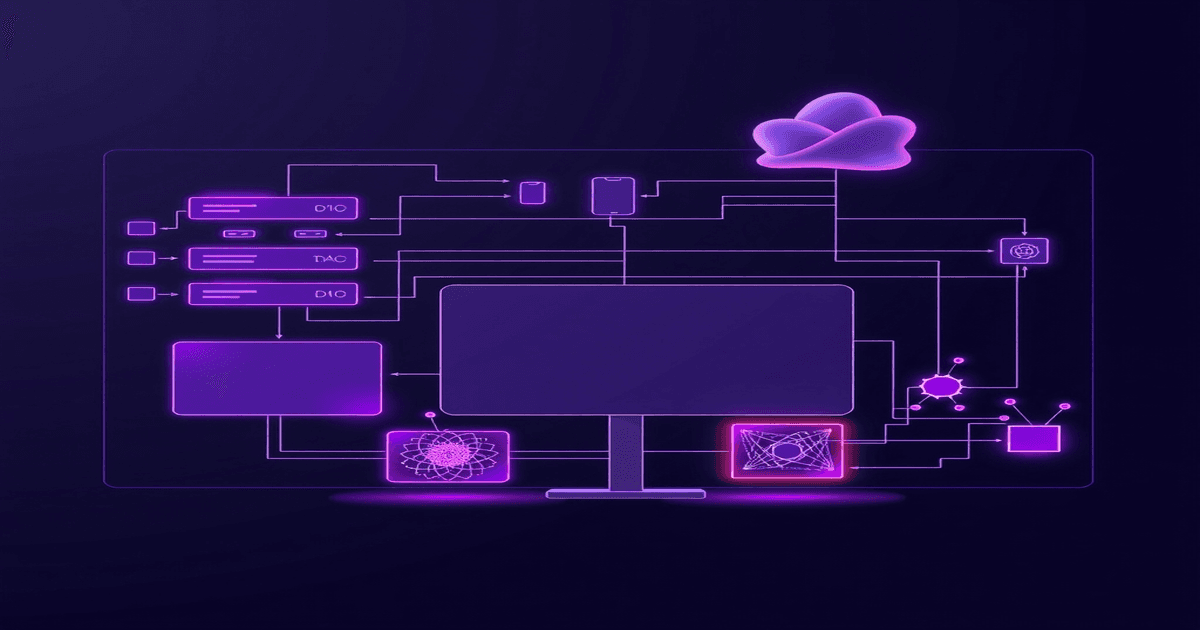
Instead, split the system into three independent loops that communicate via a shared message queue or database:
- The Discovery Loop: Scrapes job boards, normalizes unstructured text, and filters out low-value or impossible jobs.
- The Execution Loop: Runs inside a secure, isolated sandbox to write code, execute tests, and package the deliverable.
- The Delivery Loop: Handles human-in-the-loop validation and manages the submission to the freelance platform.
By separating these concerns, you can scale each component independently. You can run ten execution workers in parallel while keeping a single, slow, stealthy scraper to avoid rate limits.
The Discovery Loop: Stealth Scraping and Filtering
Most freelance platforms do not offer open APIs. The ones that do often charge enterprise fees or restrict access to historical data. You have to scrape.
Using standard headless browsers like Puppeteer or Selenium is expensive and slow. They consume massive amounts of CPU and memory. Instead, use a hybrid scraping pipeline.
Start with low-overhead HTTP clients that support custom TLS fingerprinting. Libraries like tls-client in Go or Python allow you to mimic the TLS handshakes of real browsers, bypassing basic Cloudflare challenges without loading images or executing JavaScript.
If a page requires JavaScript execution, hand the URL off to a worker running Playwright with stealth patches. This keeps resource usage low.
Once you extract the raw HTML or API payloads, you face the next problem: filtering. Most job posts are noise. Sending every job description to a frontier LLM will drain your API balance in hours.
Use a multi-stage filtering pipeline to keep costs down:
- Regex & Keyword Matching: Filter by budget, required stack, and client rating. If a job pays five dollars for a complex migration, discard it immediately.
- Local Small Language Model: Use a fast, local model like Llama 3 8B to classify the job. Ask it a simple question: "Is this job a concrete coding task with clear inputs and outputs?"
- Frontier Model: If the job passes the first two stages, send it to a larger model to extract structured requirements.
Here is a clean JSON structure to represent a normalized job:
{
  "job_id": "up_982341",
  "platform": "upwork",
  "title": "Python script to parse PDF invoices and extract totals",
  "budget": 200,
  "raw_description": "Need a python script that reads pdf invoices in a folder and extracts the total amount, date, and invoice number into a csv file. Samples attached.",
  "technical_stack": ["python", "pdf-parsing"],
  "deliverables": [
    "Python script using open-source libraries",
    "Output formatted as a CSV file with columns: Date, Invoice_Number, Total_Amount"
  ]
}
The Queue Architecture
To handle the asynchronous flow, we use a message queue. Let's design the queue paths.
Jobs flow from jobs:discovered (raw scraped jobs) to jobs:evaluated (filtered, qualified jobs) to jobs:execution (jobs currently running in a sandbox) to jobs:review (completed jobs waiting for human approval).
A lightweight Redis setup handles this distribution. Workers subscribe to specific queues, ensuring that if an execution worker crashes due to a resource limit, the job is returned to the queue rather than lost.
The Execution Loop: Secure Sandboxing
You cannot trust code written by an LLM. It might write a script that attempts to read your SSH keys, run destructive commands, or download malware. The execution loop must run in a secure, isolated environment.
Docker is the baseline, but standard Docker containers share the host kernel and are vulnerable to container escape exploits if misconfigured. The risks of poor isolation are clear from the Hugging Face security collision. For production workloads, run your execution workers inside microVMs like Firecracker or containers sandboxed with gVisor.
The execution sandbox needs three things:
- A restricted network policy (disable outbound internet access unless the job explicitly requires it, like fetching a public API).
- Strict CPU and memory limits.
- A clean filesystem state that resets after every run.
Inside this sandbox, the agent operates in an Actor-Critic loop. The agent writes code, runs it, reads the output or error messages, and refines the code until it runs successfully.
Here is a simple Python manager script that handles execution inside the sandbox:
import subprocess
import sys
import json

def run_validation(script_path, timeout_seconds=15):
    try:
        result = subprocess.run(
            [sys.executable, script_path],
            capture_output=True,
            text=True,
            timeout=timeout_seconds
        )
        return {
            "success": result.returncode == 0,
            "stdout": result.stdout,
            "stderr": result.stderr,
            "exit_code": result.returncode
        }
    except subprocess.TimeoutExpired:
        return {
            "success": False,
            "stdout": "",
            "stderr": f"Execution timed out after {timeout_seconds} seconds",
            "exit_code": -1
        }

if __name__ == "__main__":
    execution_report = run_validation("agent_solution.py")
    print(json.dumps(execution_report))
If the code fails (returns success: false), the manager sends the stderr back to the LLM agent. The agent modifies the file and tries again. Limit this cycle to four or five attempts. If the agent cannot fix the error within these limits, mark the job as failed. This prevents infinite loops and runaway API bills.
To ensure the code actually works, the agent must write its own tests. If the job description asks to extract data from a PDF, the agent should write a test script that generates a mock PDF, runs the parser, and asserts that the output CSV matches the expected structure.
Handling Dependency Drift in the Sandbox
Often, freelance jobs require specific library versions. The agent must inspect the job description, detect the required packages, and install them dynamically.
But running package installers inside the sandbox can lead to dependency conflicts or slow execution times.
To speed this up, pre-bake common runtime environments. Create base images for Python with pandas, numpy, and requests pre-installed, or Node.js with express and axios. If the agent needs a package not in the pre-baked image, it can install it, but we enforce a time limit and cache the layer.
The Delivery Loop: Human-in-the-Loop Gate
Fully automating the submission of deliverables is a bad idea. Platforms have strict policies against fully automated accounts, and clients can spot generic, bot-generated messages instantly.
Keep a human in the loop. The agent should do the heavy lifting, but a human must sign off on the final submission.
When the execution loop successfully runs its tests, it packages the code, the test logs, and a drafted proposal message. It pushes these artifacts to a simple internal dashboard or a Slack channel.
The human operator reviews the submission:
- Does the code look clean and secure?
- Did the tests cover the actual requirements?
- Does the proposal message sound natural and address the client's specific problem?
Once approved, the delivery worker uploads the files and submits the application. This hybrid model gives you the speed of automation while preserving the quality control of a human developer.
State Management and Reliability
Network drops, API timeouts, and platform updates will happen. You need a persistent state machine to track every job throughout its lifecycle.
Do not store state in memory. Use a database like PostgreSQL or SQLite to track state transitions.
[Discovered] -> [Evaluated] -> [Sandbox_Executing] -> [Test_Verifying] -> [Pending_Review] -> [Submitted]
If a worker crashes while executing code, the system can restart the container and resume from the last known state. If the execution loop fails repeatedly, the job moves to a Failed state, logging the terminal output for debugging.
Optimizing API Costs
Using large frontier models for every step of this pipeline will quickly make the operation unprofitable. A single job run can take multiple iterations of code generation, testing, and debugging.
To optimize costs:
- Use small, open models (like Mistral 7B or Llama 3 8B) for initial job classification and parsing.
- Use mid-sized models for writing the initial code blocks and test suites.
- Reserve expensive frontier models for the final debugging steps when smaller models get stuck, and for drafting the client proposal.
Always set a hard budget limit per job. If a job pays fifty dollars, cap your API spend at two dollars. If the agent exceeds this threshold, halt the process.
Handling Platform Bans and Detection
Freelance platforms actively look for automated behavior. They track IP addresses, mouse movements, typing patterns, and request headers.
If your delivery loop interacts with the platform's web interface, use residential proxies to match your physical location. When automating the submission form, do not instantly paste the entire proposal text into the input field. Use automation libraries to simulate human typing speeds, random pauses, and minor typos that get corrected.
By keeping the discovery loop decoupled from your actual account session, you minimize the risk. The scraper runs anonymously, and only the approved submissions use your logged-in session.
Building for the Long Term
Autonomous workflow agents represent a major shift in how digital work is sourced and executed. By automating the discovery and initial development phases, you can handle a higher volume of contracts without sacrificing quality. The key is maintaining isolation in execution and keeping a human hand on the trigger for submissions.
tags: ai, ai-agents, ai-engineering