The race to build larger foundation models is hitting a wall of economics and physics. For years, the default playbook for improving artificial intelligence was simple: add more parameters, feed it more tokens, and wait for emergent capabilities. But training a model with hundreds of billions of parameters costs tens of millions of dollars, and running inference on these giants requires massive clusters of specialized hardware. Nvidia's recent research points to a different path forward. Instead of scaling up the raw size of the model, engineers can get better results by wrapping smaller, specialized models in structured agent systems, or "harnesses."
This architectural shift changes how we think about compute. A standard 8-billion parameter model, when placed inside an execution harness that manages state, validates outputs, and allows for self-correction, can outperform a raw 70-billion or even a 400-billion parameter model on complex tasks. This is not just a marginal improvement. It is a fundamental change in the economics of deploying AI in production.
The Limits of Raw Scaling
Let's look at what happens when you scale a model. As parameter counts grow, the cost to train and run these models grows exponentially. Yet, the performance gains on reasoning tasks do not follow a linear path. A 400B model might perform slightly better than a 70B model on a standardized benchmark, but it requires five times the hardware to run.
Memory bandwidth is the real bottleneck here. During inference, every single parameter of the model must be loaded from memory into the processor cache for every token generated. For a 400B parameter model, this creates a massive memory transfer overhead that slows down generation speeds and drives up hardware costs. You end up paying a premium for intelligence that is often idle during simple tasks.
But larger models are still prone to structural failures, illustrating the fundamental things AI still gets wrong even with massive scale. A 70B model can hallucinate a fact or break syntax just like an 8B model, even if it happens less frequently. When a raw model makes an error in a single-turn execution, the entire run fails. The system has no built-in mechanism to catch the error, analyze what went wrong, and try again. Scaling the model size increases the probability of a correct first guess, but it does not build reliability into the system.
Understanding the Agent Harness
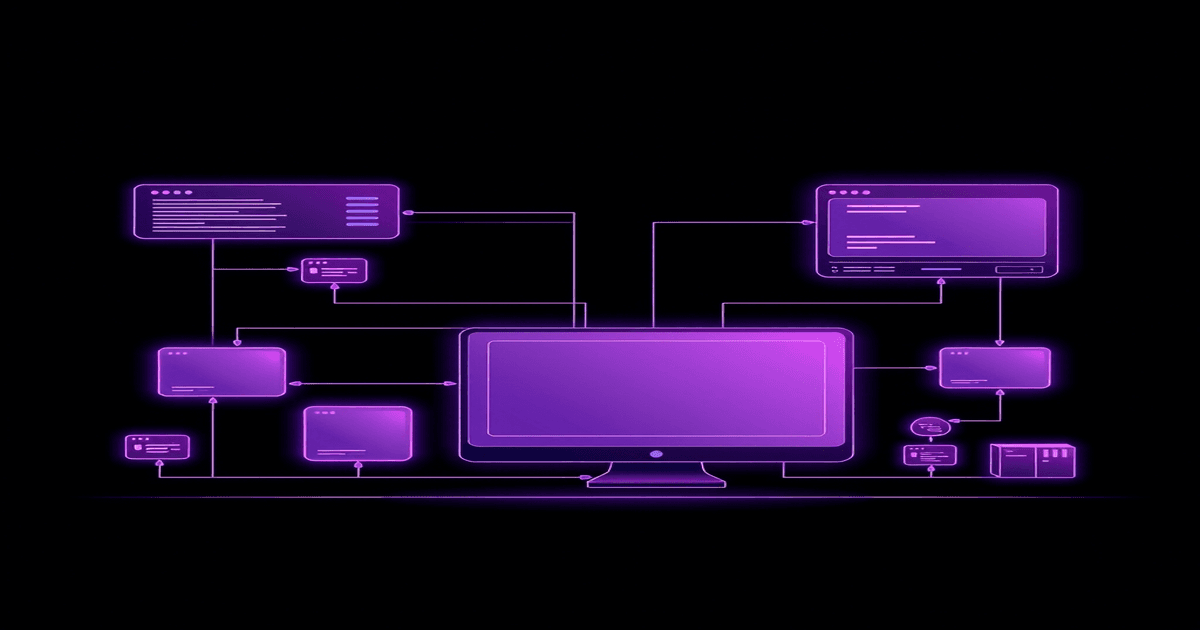
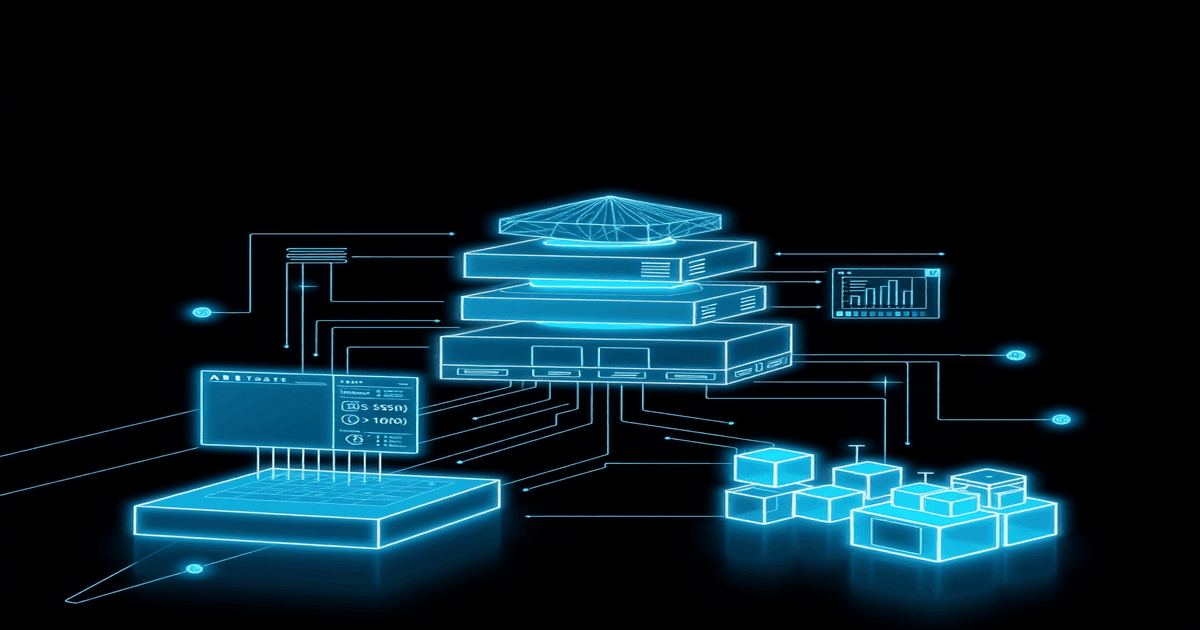
An agent harness is a software system that wraps around an LLM to control its execution flow. Instead of sending a prompt and accepting the first response the model generates, the harness treats the LLM as a processing unit within a larger program.
The harness typically manages several key functions:
- State Management: Keeping track of what has been done, what failed, and what needs to happen next.
- Output Validation: Parsing the model's output and checking it against strict schemas or running it in a sandbox.
- Execution Loops: Allowing the model to try a task, observe the error, and correct its own code or logic.
- Tool Routing: Giving the model access to external databases, web search, or code execution environments, but managing how and when those tools are called.
By separating the reasoning engine (the LLM) from the control flow (the harness), developers can build systems that are far more reliable than a single raw model pass.
Nvidia's Research: The Data Behind the Shift
Nvidia's research team analyzed how different model sizes perform when paired with structured agent workflows compared to larger models running raw prompts. The results were clear: smaller models with structured workflows regularly beat larger models operating in a single pass.
The researchers tested this using standard code generation and mathematical reasoning benchmarks, such as HumanEval and GSM8K. They compared a raw, single-turn run of a 70B parameter model against an 8B parameter model running inside a multi-turn agent harness.
In the code generation tests, the raw 70B model achieved a first-pass success rate of roughly 68%. When the 8B model was run in a basic loop that allowed it to write code, execute it in a secure sandbox, and read the compiler errors, its success rate climbed to over 80%.
The reason is simple. Even a massive model makes mistakes. When a raw model makes a syntax error or a logic error, it has no way to correct itself in a single forward pass. It outputs the broken code, and the run fails.
A smaller model in a harness, however, has a safety net. If the model outputs code with a syntax error, the harness runs the code in a sandbox, captures the compiler error, and feeds it back to the model with a prompt like: "This code failed with error X. Fix it." The model analyzes the error, makes the correction, and successfully completes the task. The system's reliability comes from the architecture, not the parameter count.
Let's look at the math of inference efficiency. Running an 8B model through five turns of a debugging loop uses roughly 40 billion parameters worth of compute. Running a 70B model for a single pass uses 70 billion parameters worth of compute. The 8B model loop is not only cheaper and faster, but it also yields a higher success rate. This is the core argument for agent harnesses.
Key Components of an Effective Harness
Building a production-grade agent harness requires more than just writing a simple loop. You need to design a system that prevents the model from getting stuck in infinite loops or hallucinating its way into a corner.
1. Structured Output Verification
A raw LLM outputs unstructured text. An agent harness forces the model to output structured formats like JSON or XML. The harness then validates this output against a schema. If the validation fails, the harness rejects the output and tells the model exactly what was missing or malformed. This prevents downstream parsing errors that crash applications.
2. Sandbox Execution
When an agent needs to write code or interact with a database, it must do so in a secure, isolated environment. The harness spins up temporary containers to execute the model's commands, captures the output, and returns it to the model. This allows the agent to test its assumptions in real-time without risking system security, a critical lesson highlighted in the anatomy of an agentic intrusion involving OpenAI and Hugging Face.
3. Context Pruning
As an agent goes through multiple loops of trial and error, the conversation history grows. If you pass the entire history back to the model, you quickly run out of context window space, and the model becomes confused by old, irrelevant errors. The harness must actively prune the context, keeping only the current state, the goal, and the most recent feedback loop.
4. Multi-Agent Debate and Consensus
In more complex scenarios, the harness can run multiple instances of the same model (or different small models) and have them review each other's work. One instance acts as the generator, another acts as the critic, and a third acts as the validator. This multi-agent debate reduces bias and catches logical gaps that a single model instance might miss.
Fine-Tuning Models for Harness Integration
While standard off-the-shelf models can work in a harness, Nvidia's research highlights the value of tuning models specifically for this role. We are already seeing this with models like Meta Muse Glimmer, a 30B open-weight model designed for local agents. A model tuned for a harness does not need to know everything about the world. It does not need to memorize trivia or write poetry.
Instead, it needs to excel at:
- Following system instructions perfectly.
- Outputting valid JSON without conversational filler.
- Recognizing when it does not know something and calling the correct tool.
- Parsing error logs and identifying the root cause of a failure.
By focusing fine-tuning efforts on these system-level skills, engineers can create highly capable 8B models that act as reliable engines within the harness. This reduces the training data requirements and makes the fine-tuning process much faster and cheaper.
Inference-Time Compute: The New Frontier
A key insight from the Nvidia research is the trade-off between training-time compute and inference-time compute. Historically, AI labs spent almost all their compute budget on training. Once the model was trained, inference was treated as a static forward pass. You run the input through the network once, and you get the output.
Agent harnesses change this equation by shifting compute to the inference phase. Instead of spending millions of dollars to train a model that can get the answer right on the first try, you spend a fraction of that amount to train a smaller model, and then allow it to run multiple iterations at runtime.
This is often referred to as "system-level reasoning." By giving the model the time and the computational steps to think, test, and correct itself, we are using compute at the moment it is needed most. This matches how humans solve complex problems. We do not write a complex software program in a single draft without running it. We write a draft, run it, look at the compiler errors, and fix them. The agent harness brings this iterative workflow to machines.
This approach also makes the system more adaptable. If you need to update the rules of your system, you do not need to retrain a 70B model. You simply update the validator rules in the harness. The small model will adapt to the new validation criteria immediately, saving weeks of training time and compute resources.
The Economics of Production AI
For businesses deploying AI, the shift to agent harnesses is a financial necessity. Hosting a 400B parameter model requires multiple H100 or H200 GPUs, leading to massive infrastructure bills. The latency is also high, making real-time applications difficult to build.
An 8B model can run on a single, lower-cost GPU or even on edge devices. It can generate tokens at a fraction of the cost and at much higher speeds, similar to how Cloudflare runs Kimi and GLM models smaller and faster at scale. When you wrap this model in a harness, you get reliability without the enterprise-grade hardware bill.
Let's look at the numbers. A single H100 GPU can serve multiple concurrent users running an 8B model at high throughput. The same GPU would struggle to run a 70B model for a single user without significant quantization, which degrades the model's intelligence. By using an agent harness with an 8B model, you can scale your user base without scaling your hardware footprints at the same rate.
This harness approach also makes debugging easier. When a raw model fails, it is hard to know why. The weights are a black box. When an agent system fails, you can look at the execution log. You can see exactly what the model output, what the validator rejected, and where the logic broke down. This allows software engineers to fix system behavior by adjusting the harness rules or the validation logic, rather than retraining the model.
Designing a Basic Agent Loop
To see how this works in practice, consider a simple python pattern for a code-execution harness. This code runs a generation loop, executes the output in a sandbox, and feeds errors back to the model.
def run_agent_loop(task, max_attempts=3):
    context = [{"role": "system", "content": "Write Python code inside ```python blocks. No filler."}]
    context.append({"role": "user", "content": task})

    for attempt in range(max_attempts):
        response = call_llm(context)
        code = extract_code(response)

        success, error_message = execute_in_sandbox(code)
        if success:
            return code

        # Feed error back to model
        context.append({"role": "assistant", "content": response})
        context.append({
            "role": "user",
            "content": f"Execution failed with error: {error_message}. Fix the code."
        })

    raise Exception("Agent failed to complete task within limit")
This simple structure handles errors that would otherwise break a standard single-pass LLM pipeline. You can expand this pattern to include database queries, API calls, and human-in-the-loop validation.
The Future of AI Systems Engineering
The transition from model scaling to system scaling is already underway. We are moving away from the idea that a single model should do everything. Instead, the future belongs to systems of small, fast, specialized models coordinated by structured software.
This means the role of the AI engineer is shifting. It is no longer just about writing prompts or fine-tuning weights. It is about systems engineering-building the rails, the validators, the memory systems, and the execution environments that allow models to do their work safely and reliably.
Nvidia's research shows that the path to artificial general intelligence might not be a single giant neural network, but a collection of smaller networks working together inside a well-designed software harness. For developers and enterprises, this is good news. You do not need a supercomputer to build useful, reliable AI applications. You just need good systems design.