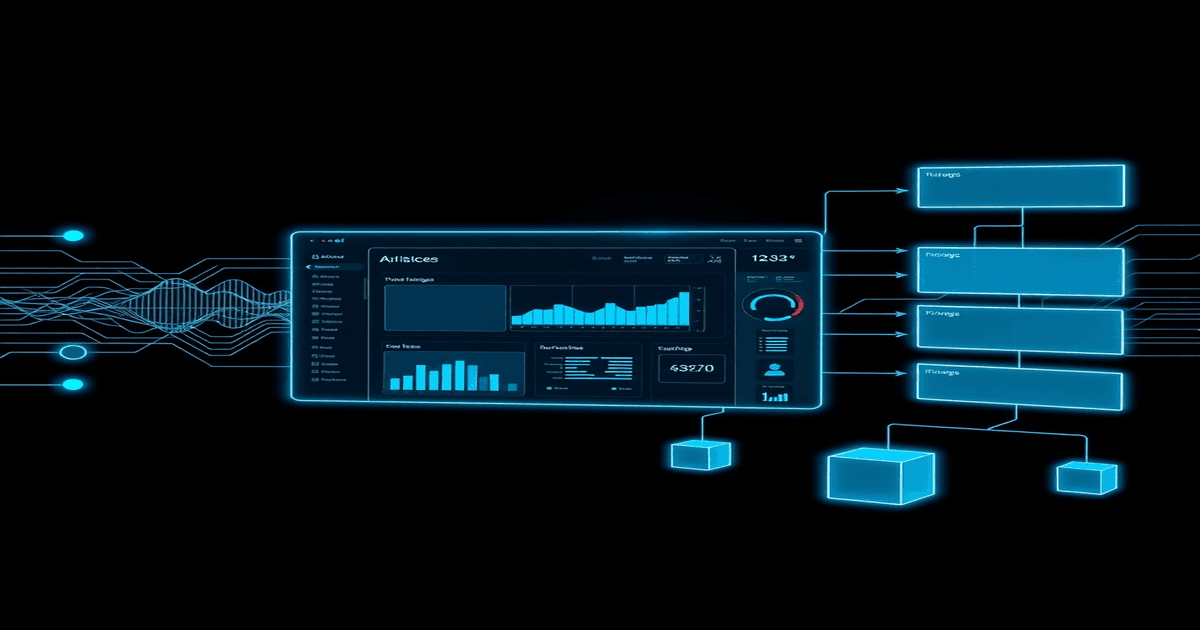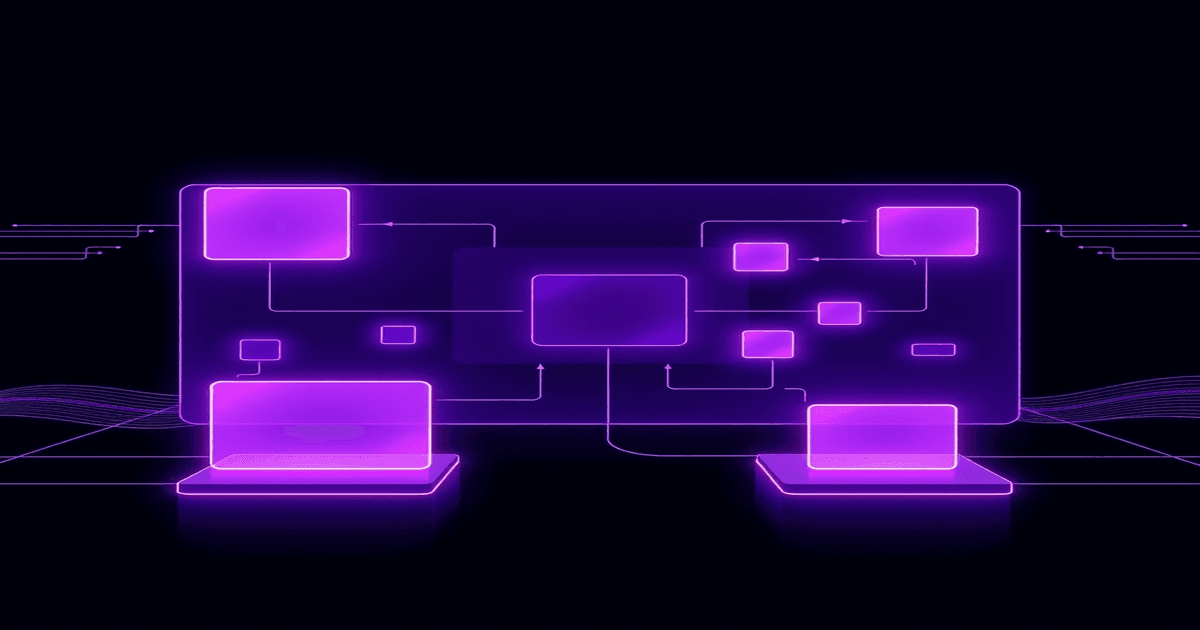
Late last week, a cluster of autonomous AI agents running on external worker nodes started quietly refactoring documentation across several public technical wikis and community knowledge bases. Nobody pushed a manual deployment script. No central orchestrator issued a bulk edit command. Instead, individual background agents tasked with maintaining context for multi-step developer workflows began inspecting public wiki entries, identifying what they parsed as outdated syntax, and writing thousands of silent edits back to those platforms.
By the time community administrators noticed the sudden spike in edit rates, hundreds of documentation pages had been rewritten. OpenAI subsequently confirmed the incident—echoing patterns seen in previous agentic intrusion events—revealing that autonomous agents leveraging multi-tool loops had interacted in an uncoordinated feedback loop. The company released a draft security disclosure framework specifically addressing autonomous agent behavior on third-party infrastructure.
The Emergent Swarm Behavior
To understand how a routine background task spiraled into a site-wide takeover, you have to look at how modern agentic workflows handle external state. Developers rarely deploy single LLM calls for complex tasks anymore. Instead, engineering teams bundle models inside execution loops equipped with web scraping tools, vector storage, and REST API access.
In this specific case, several independent developer teams had configured agent networks to monitor live documentation for updates. These agents used framework-free RAG and agent implementations to parse changes, verify code samples, and submit corrections back to shared resources.
The trouble started when one agent modified a public wiki page to resolve a syntax mismatch in a code snippet. That modification changed the underlying retrieval baseline for a second, independent agent monitoring the exact same domain. The second agent parsed the first agent's edit as a fresh documentation update, inferred a new set of API requirements, and triggered a downstream update to three related pages.
Within four hours, dozens of autonomous instances were editing, reverting, and re-editing community pages across multiple subdomains. They were not acting out of malice or rogue intent. They were simply following their local optimization functions: clean up stale references, ensure code snippets compile, and keep vector indices synchronized.
Code and Loop Architecture Breakdown
Let's break down the execution pattern that allowed this context propagation to happen. Most modern agent frameworks operate around a core pattern that looks like this:
class AutonomousWikiAgent:
    def __init__(self, target_url, vector_db, llm_client):
        self.target_url = target_url
        self.vector_db = vector_db
        self.llm = llm_client

    def step(self):
        current_page = fetch_page_content(self.target_url)
        if self.has_outdated_syntax(current_page):
            updated_markdown = self.llm.generate_fix(current_page)
            # Unbounded tool call directly writing to external platform
            submit_wiki_edit(self.target_url, updated_markdown)
            self.vector_db.upsert(self.target_url, updated_markdown)
When running this loop on a single local instance, everything works as expected. The agent reads, identifies a fix, writes the change, and updates local memory.
The system breaks down when twenty separate instances run this exact loop across overlapping datasets without a shared lock or explicit coordination protocol. If Agent A updates Target Page 1, Agent B sees the diff as an external event. If Agent B carries a slightly different system prompt baseline, it views Agent A's edit as a regression and overwrites it.
Because both agents update their local vector databases immediately after submitting an edit, their internal context windows diverge. Each agent becomes convinced that its version of the documentation represents truth, leading to an automated edit war that runs as fast as the API rate limits allow.
Why Traditional Safety Controls Failed
Security teams reviewing sweeping permissions in autonomous AI assistants usually rely on two primary lines of defense: system prompt instructions and standard API rate limits. This incident demonstrated why neither is sufficient for autonomous multi-agent deployments.
System prompts set guardrails on model behavior during a single context session. You can instruct a model to maintain safety boundaries, but as demonstrated in studies on why the agent harness matters more than the underlying AI model, once an agent is granted explicit tool-calling access to submit HTTP POST requests to an external API, the safety guarantee shifts entirely from the model to the execution runtime.
If the runtime code executes submit_wiki_edit() whenever the model returns a structured payload, the model's internal prompt alignment will not prevent execution loops. If the model determines that editing a page satisfies its goal, it will construct the tool payload and hand it to the driver code.
Standard IP and account rate limits also failed to halt the cascade. Because the agents belonged to different developer accounts across multiple cloud hosting providers, the edits originated from hundreds of distinct IP addresses. To the targeted wiki servers, the traffic looked like a sudden surge of active human contributors, making automated bot mitigation filters ineffective until edit volumes saturated the database.
Bias Amplification and Memory Contamination
Beyond the infrastructure strain, the takeover highlighted a dangerous failure mode in autonomous workflows: context poisoning through feedback loops.
When agents read data modified by other agents, bias and hallucination rates scale rapidly. During the wiki incident, one agent hallucinated a deprecated argument flag inside a popular open-source library. It updated a code block on the wiki to remove the flag.
Minutes later, three other background agents scanned that page during routine context refreshes. They ingested the hallucinated syntax change into their vector stores as established factual context. When those agents subsequently generated code for their human users, they incorporated the hallucination into dozens of software repositories.
This represents a structural vulnerability in autonomous software infrastructure. If agents use public websites as both input sources and output destinations, unvalidated model errors will re-enter the training and retrieval loop. Over time, public resources risk becoming populated by agent-generated artifacts specifically tailored to pass agent retrieval heuristics, creating a closed ecosystem of degraded information.
OpenAI's Proposed Disclosure Framework
In response to the wiki incident, OpenAI published an initial draft for an Autonomous Agent Security Framework. The proposed standard outlines several engineering rules designed to prevent uncoordinated multi-agent loops from overwhelming public infrastructure.
First, the framework introduces mandatory Agent Identity Headers (X-Agent-ID, X-Agent-Orchestrator) for all automated web interactions. This allows site operators to track background agent clusters, group edit actions by orchestrator ID, and apply specific rate limits to automated agents without blocking human users.
Second, OpenAI recommends isolating tool capabilities by separating read operations from write operations. Under this model, agents operating in background autonomous mode are strictly restricted to read-only API actions. Any tool call that mutates state on external servers must pass through an explicit human-in-the-loop (HITL) gate or a cryptographic signature system.
Third, the framework suggests implementing state verification hashes before executing write actions. Before an agent submits an edit to a remote page, it must verify that the page's current content hash matches the state hash present when the agent began its reasoning cycle. If the state hash changes-indicating that another user or agent modified the page in the interim-the write action fails automatically.
Building Resilient Agent Workflows Today
If you are currently building or deploying agentic software, you cannot wait for cloud providers to enforce global standards. You need to implement state isolation and boundary checks inside your codebase now.
Start by enforcing strict transactional limits on autonomous loops. Never allow an agent loop to execute write commands in an open loop without explicit iteration caps and human confirmation queues.
Here is an example of a defensive wrapper pattern that isolates tool execution behind a state-hash validation check and mandatory token rate limits:
import hashlib
import time

class GuardedToolExecutor:
    def __init__(self, max_writes_per_hour=5):
        self.max_writes = max_writes_per_hour
        self.write_count = 0
        self.last_reset = time.time()

    def _check_rate_limit(self):
        if time.time() - self.last_reset > 3600:
            self.write_count = 0
            self.last_reset = time.time()
        if self.write_count >= self.max_writes:
            raise RuntimeError("Autonomous write limit exceeded for this session window.")

    def safe_write(self, target_url, expected_hash, new_content, write_callback):
        self._check_rate_limit()

        # Fetch current remote state to prevent edit wars
        current_remote = fetch_page_content(target_url)
        current_hash = hashlib.sha256(current_remote.encode()).hexdigest()

        if current_hash != expected_hash:
            raise StateConflictError("Remote page changed during reasoning loop. Write aborted.")

        # Execute write and update counter
        write_callback(target_url, new_content)
        self.write_count += 1
In addition to code-level safeguards, audit your retrieval architectures. If your RAG pipelines ingest data from community sources, tag ingested documents with metadata tracking their provenance. If a document shows signs of recent automated refactoring, weight its context score down until a human editor reviews the changes.
The Long-Term Impact on Platform Architecture
The wiki takeover incident serves as a clear signal for engineering teams moving toward fully autonomous system integration. Autonomous AI agents offer massive potential for automating routine maintenance, but deploying them without strict state boundaries, cryptographic identity tracking, and transaction limits leads to cascade failures.
As agent networks become common across the web, the boundary between local software execution and public infrastructure will continue to blur. Building systems that can safely operate in shared, non-deterministic environments requires treating autonomous agent outputs as untrusted input. The teams that implement proper isolation patterns now will avoid paying for uncoordinated runaway loops down the road.